Invisalign V/S Braces, Which one you should prefer?
The demographic profile of orthodontic patients has undergone a significant transformation over the past two decades. Historically viewed primarily as a pediatric or adolescent intervention, orthodontic treatment is increasingly sought by adults aiming to correct functional bite issues, relieve jaw pressure, and improve dental aesthetics. According to data from the American Association of Orthodontists (AAO), an astounding 65 percent of adults do not have well-aligned front teeth, and currently, one in four orthodontic patients is an adult. This surge in adult orthodontics is largely attributed to advancements in clear aligner technology, which provides a highly discreet and lifestyle-friendly alternative to traditional metal appliances. For adult patients, the clinical decision between traditional fixed braces and clear aligner therapy—most notably the Invisalign system—requires a nuanced evaluation of biomechanical efficacy, treatment duration, financial investment, oral hygiene, and daily lifestyle impact. Furthermore, the ultimate success of either modality relies heavily on the diagnostic precision, training, and technological infrastructure of the providing dental practice.
Biomechanics, Clinical Efficacy, and Predictability
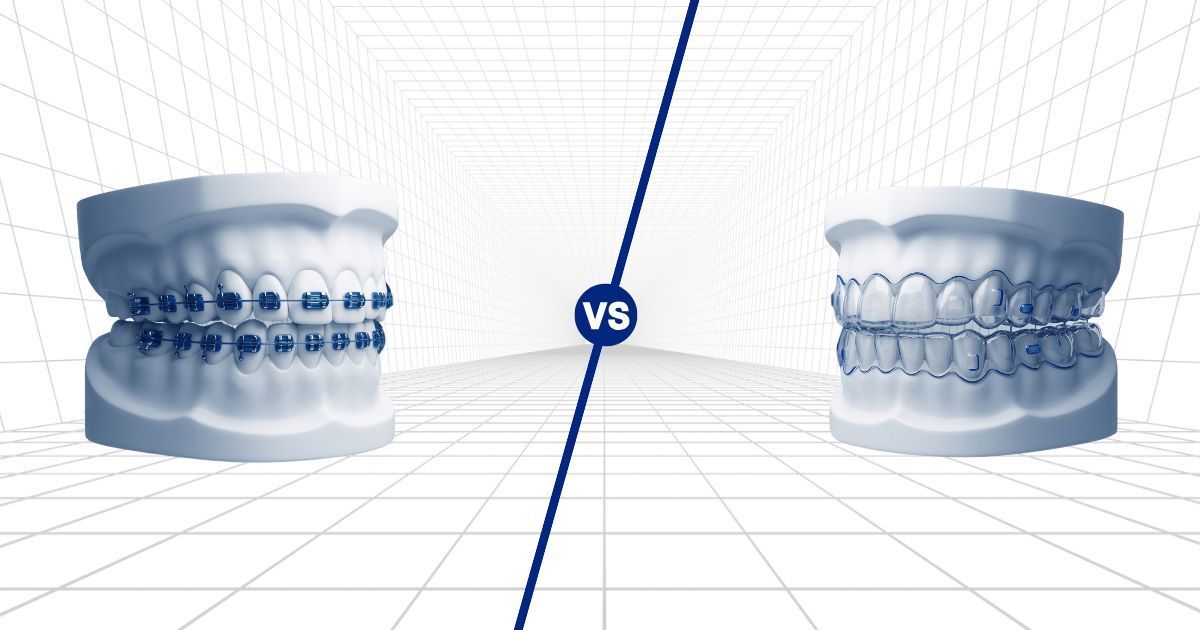
Traditional braces and Invisalign operate on fundamentally different biomechanical principles to achieve tooth movement. Traditional metal or ceramic braces utilize brackets bonded directly to the enamel of each tooth, connected by an archwire that applies continuous, controlled force.
This fixed system is exceptionally precise and remains the gold standard for treating severe crowding, impacted teeth, significant vertical bite abnormalities, difficult tooth rotations, and complex skeletal jaw issues . The continuous force allows for intricate root movements that removable aligners sometimes struggle to achieve independently. While some adults worry about the stigma of metal braces, modern brackets are smaller and less obtrusive than ever, and clear ceramic options offer a subtler appearance.
Invisalign, conversely, utilizes a series of custom-fabricated, BPA-free plastic trays generated from sophisticated 3D digital scans of the patient's dentition. Each tray is engineered to apply precise, incremental force to move teeth sequentially over time. Clinical studies, including a randomized controlled trial published by Texas A&M University, demonstrate that Invisalign is equally as effective as traditional braces for treating mild to moderate cases of crowding, spacing, overbite, and crossbite.
The primary variable in the success of Invisalign is patient compliance. To achieve the predicted clinical outcomes, clear aligners must be worn for 20 to 22 hours per day, removed only for eating, drinking anything other than water, and oral hygiene routines. Failure to adhere to this strict wear schedule can result in delayed treatment timelines and teeth failing to track properly with the aligners. Traditional braces bypass this compliance hurdle entirely, functioning continuously once affixed by the orthodontist.
Aesthetics, Comfort, and Dietary Lifestyle
For many adults, aesthetics and lifestyle impact are the deciding factors. Traditional braces are highly visible, which can be a concern for adults who wish to maintain a polished professional image during meetings or public speaking. Clear aligners sit flush against the teeth and are nearly invisible, allowing patients to undergo treatment without drawing attention to their dental work.
Comfort is another major differentiator. Braces use brackets and wires that can scrape soft tissue and cause ulcers, especially in the first weeks after fitting and after each tightening appointment. Aligner adjustments feel more like a steady pressure for a few days, rather than the sharper soreness that often follows wire tightening.
Dietary restrictions also play a massive role in patient satisfaction. Apples, popcorn, crusty bread, sticky sweets, and chewy meats are typically off-limits with traditional braces because they can damage brackets or get trapped in wires. With Invisalign, patients remove the trays to eat normally, meaning there are absolutely no dietary restrictions throughout the treatment process.
Treatment Duration, Cost, and Periodontal Health
Treatment timelines are dictated by case complexity, but clear statistical averages have emerged for adult patients. Invisalign treatments typically span 12 to 18 months for mild to moderate corrections. Traditional braces often require a longer commitment, generally averaging 18 to 24 months, with complex bite corrections extending further. Because Invisalign relies on advanced 3D planning, patients often require fewer and shorter clinic visits—usually brief check-ins every 6 to 10 weeks compared to the monthly tightening appointments required for braces.
Financial considerations also play a major role in treatment selection. According to survey data from the American Dental Association (ADA), comprehensive orthodontic treatment averages between $5,000 and $6,000. Traditional metal braces generally range from $3,000 to $7,500. Invisalign costs are highly comparable, though they occasionally occupy the higher end of the pricing spectrum due to laboratory and digital fabrication fees. Many patients delay treatment due to cost, but untreated crowding makes teeth harder to clean, and a misaligned bite can lead to jaw pain and uneven wear later in life.
Beyond duration and cost, the impact on periodontal health represents a critical consideration. Traditional braces present physical obstructions to standard brushing and flossing, often trapping food particles and plaque. This increases the risk of enamel decalcification, cavities, and gingival inflammation. The removable nature of clear aligners facilitates unimpeded oral hygiene. Research published in the European Journal of Orthodontics consistently reveals that patients utilizing clear aligners maintain healthier gum tissue and exhibit lower overall plaque scores compared to those wearing fixed traditional braces.
| Clinical Variable | Invisalign (Clear Aligners) | Traditional Braces |
|---|---|---|
| Primary Indication | Mild to moderate crowding, spacing, minor bite issues | Severe crowding, complex malocclusions, impacted teeth |
| Average Duration | 12 to 18 months | 18 to 24 months |
| Average Cost | Comparable to premium ceramic braces | $3,000 to $7,500 |
| Patient Compliance | High (Requires 20–22 hours of daily wear) | Low (Fixed appliance operates continuously) |
| Periodontal Impact | Unimpeded hygiene; lower plaque scores | Requires specialized cleaning tools; higher risk of gingivitis |
| Dietary Restrictions | None (trays are removed during meals) | High (avoidance of hard, sticky, or chewy foods) |
| Aesthetics | Nearly invisible | Visible metal or ceramic hardware |
| Comfort | Generally more comfortable; smooth plastic edges | May cause initial soreness and cheek irritation |
| Oral Hygiene | Easy to brush and floss after removing trays | More difficult due to brackets and wires |
| Treatment Predictability | Digital treatment planning with staged tooth movement | Established and highly predictable for complex movements |
Regardless of the chosen modality, the permanence of the results relies on post-treatment retention. Tissues and bone surrounding the teeth require time to stabilize post-treatment, making lifelong, nightly retainer use a universal recommendation to prevent biological relapse.
Frequently Asked Questions (FAQs)
Is Invisalign treatment painful?
Mild discomfort is normal and expected. Most patients experience mild pressure or tenderness during the first few days of switching to a new aligner set. However, because Invisalign utilizes smooth plastic without sharp metal wires or brackets, patients generally experience fewer cuts or abrasions on the inside of their cheeks compared to traditional braces.
Does Invisalign fix teeth permanently?
Both Invisalign and traditional braces offer long-term, permanent results if the treatment is properly completed and followed by consistent retainer use.Teeth naturally shift as we age, so wearing your retainer as directed by your dentist is the
only way to ensure your teeth remain in their corrected positions for life.
What happens if I do not wear my Invisalign for 22 hours a day?
Failing to wear the aligners for the recommended 20 to 22 hours a day can cause your treatment to fall behind schedule.
Your teeth may not move as predicted, and your next set of aligners may stop fitting correctly, which can prolong your overall treatment time.
Can I drink coffee or tea while wearing my aligners?
No. You must remove your aligners before eating or drinking anything other than plain water. Dark beverages like coffee, tea, and red wine can easily stain the clear plastic trays. Furthermore, consuming sugary drinks while wearing aligners traps the sugar directly against your teeth, drastically increasing the risk of cavities.
Reference Literature and Clinical Studies
For patients and professionals seeking deeper academic insights into the comparative effectiveness of these treatments, the following journals and publications serve as excellent reference literature:
- American Journal of Orthodontics and Dentofacial Orthopedics: Published studies demonstrating that Invisalign and traditional braces are equally successful in treating mild to moderate cases of crowding, spacing, and bite problems.
- European Journal of Orthodontics: Featured clinical research showing that patients using Invisalign report lower levels of discomfort and maintain significantly lower plaque scores than those with fixed braces.
- Journal of Clinical Orthodontics: Published findings indicating higher patient satisfaction rates with Invisalign regarding the minimal impact on daily activities like speaking and eating.
- Journal of the American Dental Association: Provided survey data on adult patient satisfaction, highlighting the aesthetic and lifestyle benefits of clear aligner therapy.
- Journal of the World Federation of Orthodontists: Released studies detailing the limitations of clear aligners in addressing severe skeletal overbites and overjets compared to traditional braces.
- American Journal of Orthodontics and Dentofacial Orthopedics: Published studies demonstrating that Invisalign and traditional braces are equally successful in treating mild to moderate cases of crowding, spacing, and bite problems.
- European Journal of Orthodontics: Featured clinical research showing that patients using Invisalign report lower levels of discomfort and maintain significantly lower plaque scores than those with fixed braces.
- Journal of Clinical Orthodontics: Published findings indicating higher patient satisfaction rates with Invisalign regarding the minimal impact on daily activities like speaking and eating.
- Journal of the American Dental Association: Provided survey data on adult patient satisfaction, highlighting the aesthetic and lifestyle benefits of clear aligner therapy.
- Journal of the World Federation of Orthodontists: Released studies detailing the limitations of clear aligners in addressing severe skeletal overbites and overjets compared to traditional braces.
Professional Care and Advanced Technology at Our Winter Springs Office
The successful implementation of adult orthodontic treatment is heavily dependent on the clinical environment, the expertise of the practitioners, and the diagnostic technology utilized by the dental provider. The Winter Springs office serves as a prime exemplar of a fully integrated, technologically advanced clinical setting equipped to deliver superior orthodontic outcomes.
The practice is spearheaded by Dr. Parminder Narang, a highly trained professional committed to clinical excellence. Dr. Narang specializes in Invisalign, demonstrating a proven track record of advanced clinical experience and successful patient outcomes with the clear aligner system. This level of specialized training ensures that adult orthodontic cases are diagnosed with precision and managed with expertly tailored treatment plans. Furthermore, the facility is equipped with state-of-the-art diagnostic and restorative technologies, which are essential for ensuring a patient's oral health is optimized before, during, and after orthodontic treatment:
- Digital X-Ray and Panorex Imaging: Before initiating Invisalign, a comprehensive assessment of the craniofacial structure is mandatory. The office utilizes advanced Digital X-Rays, which expose patients to 80 percent less radiation while allowing clinicians to zoom in on specific anatomical structures with high definition. Additionally, 360-degree Panorex imaging captures complete views of the upper and lower jaws, temporomandibular joints, and sinuses, identifying hidden pathologies or impacted teeth that traditional localized X-rays might miss.
- Electric Handpieces: For patients requiring restorative care prior to orthodontics, the practice utilizes advanced electric handpieces. These devices maintain constant torque and spin faster than traditional air-driven drills, allowing clinicians to remove decay with greater accuracy and speed, thereby minimizing time spent in the dental chair.
- Rotary Endodontics: In cases where an underlying infection requires root canal therapy, the practice employs rotary endodontics. This modern technique utilizes a flexible, electric-powered drill tipped with nickel-titanium, allowing the instrument to navigate the curved canals of a tooth root efficiently. This results in faster procedures and significantly less patient discomfort.
By combining elite-level practitioner training with a cutting-edge technological infrastructure, the Winter Springs office ensures that adult patients seeking to improve their smiles through Invisalign or other restorative procedures receive the highest standard of modern, comprehensive dental care. To schedule a consultation, you can contact the Winter Springs office directly.
Contact Us
407-706-3434
5220 Red Bug Lake Rd, Winter Springs, FL 32708
Related Posts